Billy wallson
Senior DirectorHow to keep a little green alive through the coldest months of the year.
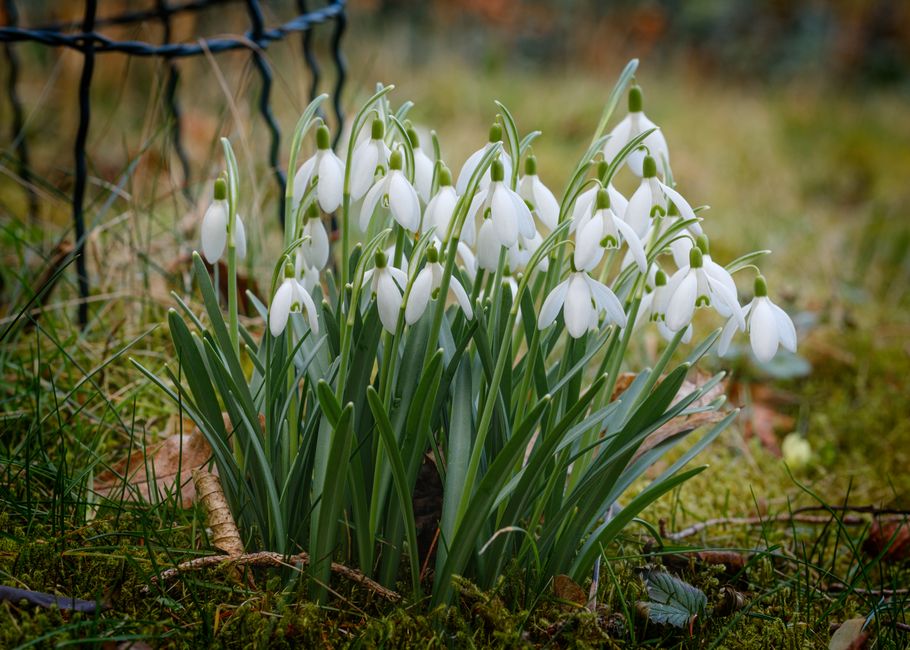
There is a particular morning in late January or early February when the garden feels utterly asleep. The beds are sodden, the trees are bare, and the sky hangs low and grey. And then, if you look closely at a corner you had almost given up on, you will see them: small white bells nodding on slender green stems, no taller than your thumb. Snowdrops. They do not announce themselves. They simply arrive, quietly, as if they had always been there.
I have come to think of the snowdrop as the most honest flower in the garden. It makes no promises about spring. It does not bloom in a burst of colour or demand attention. It simply proves, in the smallest possible way, that life continues even when everything around it insists otherwise. For anyone who gardens through the darker months, that proof matters more than any summer display.
Snowdrops are built for the cold. Their leaves and flower stems contain natural antifreeze compounds that keep their cells from freezing solid on frosty nights, and their hardened tips can push through ground that is still partly frozen. They also take advantage of a simple fact of the season: with the trees bare, sunlight reaches the woodland floor unobstructed, giving these low-growing bulbs all the light they need before the canopy closes over them in spring.
This is why snowdrops naturalise so happily under deciduous trees and along hedgerows. They do not need rich soil or a sheltered spot. What they need is patience and a little shade in summer, when they are dormant and would rather be left alone. If you plant them in a place that stays damp and cool, they will slowly multiply, year after year, until a single clump becomes a drift.
One gentle caution: snowdrops rarely transplant well when bought dry in autumn. The bulbs dislike drying out. If you can, plant them 'in the green' in early spring, just after flowering, when they still have their leaves. They settle in far more readily and will often bloom the following winter.
Every year, I make a point of visiting a local churchyard in early February where snowdrops have naturalised for decades. It is not a grand garden. There is no design to it. But the sight of those white flowers scattered across the grass, unbothered by wind and frost, does something to me that no summer border ever quite manages. It is not beauty, exactly. It is reassurance.
If you grow snowdrops, try this: go out on a cold morning, before the day has properly begun, and simply stand with them for a few minutes. Notice how they close their outer petals when the temperature drops and open again when the sun returns. They are not fighting the season. They are working with it. There is a lesson in that, I think, for anyone who finds winter long.
Snowdrops will never be the showiest flower in your garden. They will never fill a vase or stop traffic. But they will arrive, faithfully, at the moment you need them most, and they will ask nothing in return. That, to me, is the whole of gentle gardening in a single plant.

Tulips ask for very little in return for their brief, brilliant display, but they do ask you to accept that some beauty cannot be kept.

The quiet therapeutic power of tending plants with your own two hands.
Rather than fighting the calendar, let the seasons set the pace; here is a loose, forgiving guide to what to do when.

A balcony, a windowsill, or a single step can become a garden if you choose the right plants and give them a little steady attention.

How to keep a little green alive through the coldest months of the year.

You do not need a meadow to help the bees; a few well-chosen flowers in pots or borders can make a real difference through the seasons.

Copyright © 2026 Snowdrop Says. All Rights Reserved.


Roseanne Williams
Sep 29, 2026 ReplyBefore the last frost has loosened its grip, snowdrops push through frozen ground and remind us that softness and strength are not opposites.